When waves are too slow
Prioritize a card that improves clear consistency before chasing a niche support option. Farming only works when you can return to the same content without constant resets.
A repeatable route for cards, waves, and upgrades
A productive Card Chronicles farm session is not just rolling until something rare appears. It is a loop: use a lineup that can clear repeatable waves, identify the job you are missing, pursue one improvement at a time, and test that improvement against the same obstacle. This guide keeps the route useful even when exact card rates and ability values are not publicly confirmed.
The public game description supports the mechanics behind this loop: cards can be rolled and upgraded, abilities are unlocked, players plan lineups, and progression includes endless waves and strong foes. Creator videos add practical demand signals around strong cards, luck, and overnight progression. They are references for player questions, not a reason to claim hidden rates or guaranteed results.
Video by Radex Tips. Open on YouTube.
Use this as the main farming reference. The site translates the 'strong cards fast' topic into a practical farm route: prepare codes and boosts, roll during focused windows, upgrade keeper roles, and validate the lineup through waves.
Source boundary: Full transcript not available from automated extraction.
The goal is stronger usable cards, not just more rolls. A card is worth keeping only if it improves wave clear, survival, or boss push consistency.
Save Luck or Roll Speed resources until you can pay attention to the results. A focused session makes it easier to decide what to keep and what to stop upgrading.
Work through this in order. Skip a step only when you already know the answer from recent, repeatable runs.
Last reviewed: July 11, 2026
| Phase | What to do | Why it matters |
|---|---|---|
| 1. Check your current wall | Run the content you are currently farming and identify the first repeatable failure: slow clear, low survival, or a missing support job. | Do not reroll yet. A new pull cannot fix a problem you have not identified. |
| 2. Stabilize a keeper role | Use your most reliable card for the job that holds the lineup together, then invest upgrades where they make repeated waves safer. | A stable loop makes every later roll and boost easier to evaluate. |
| 3. Set one roll goal | Decide whether you are looking for a stronger carry, a support job, or a replacement for a temporary filler. | One goal prevents a session from turning into random rerolls. |
| 4. Use resources in a focused window | Use reported luck, speed, or reroll resources only when you can actually compare pulls and test them. | A boost is most useful when you can immediately decide keep, test, or replace. |
| 5. Test at the same wave | Put a possible upgrade into the same kind of wave or foe that exposed the original weakness. | Consistent tests tell you more than a one-off lucky run. |
| 6. Record the next action | Keep the card if it fixes the job, keep it as a filler if it is merely usable, or return to the stable lineup. | A short note stops you from repeating the same uncertain decisions later. |

Use this as a progression-method reference. The site converts the broad 'become the best' framing into safer steps: build a repeatable farm loop, sort cards by role, upgrade keepers, and test waves before spending more boosts.
Use the video as a gameplay reference. The durable part is the process: stabilize progress, choose a single aim for the session, and test every possible upgrade. Exact rewards, odds, or hidden timings still need direct confirmation.
Watch source videoPrioritize a card that improves clear consistency before chasing a niche support option. Farming only works when you can return to the same content without constant resets.
Your lineup may need a stronger carry job rather than more defensive fillers. Test the change against the exact wave where progress slows down.
Give it a controlled test. Replace one slot, run the same content, and compare the result before committing upgrades or rerolls.
These sources cover high-volume rolling and luck-focused progression. They help explain why players look for farm routes, but they are not used as proof of exact odds.

Use this as evidence that Card Chronicles players care about large roll sessions and luck variance. The site turns that into advice about tracking roll windows instead of judging luck from a tiny sample.
Watch source video
Use this as a luck routine reference. The safe player advice is to treat luck as a session setup problem: clear inventory decisions, prepare boosts, roll in a planned window, and record what changed.
Watch source video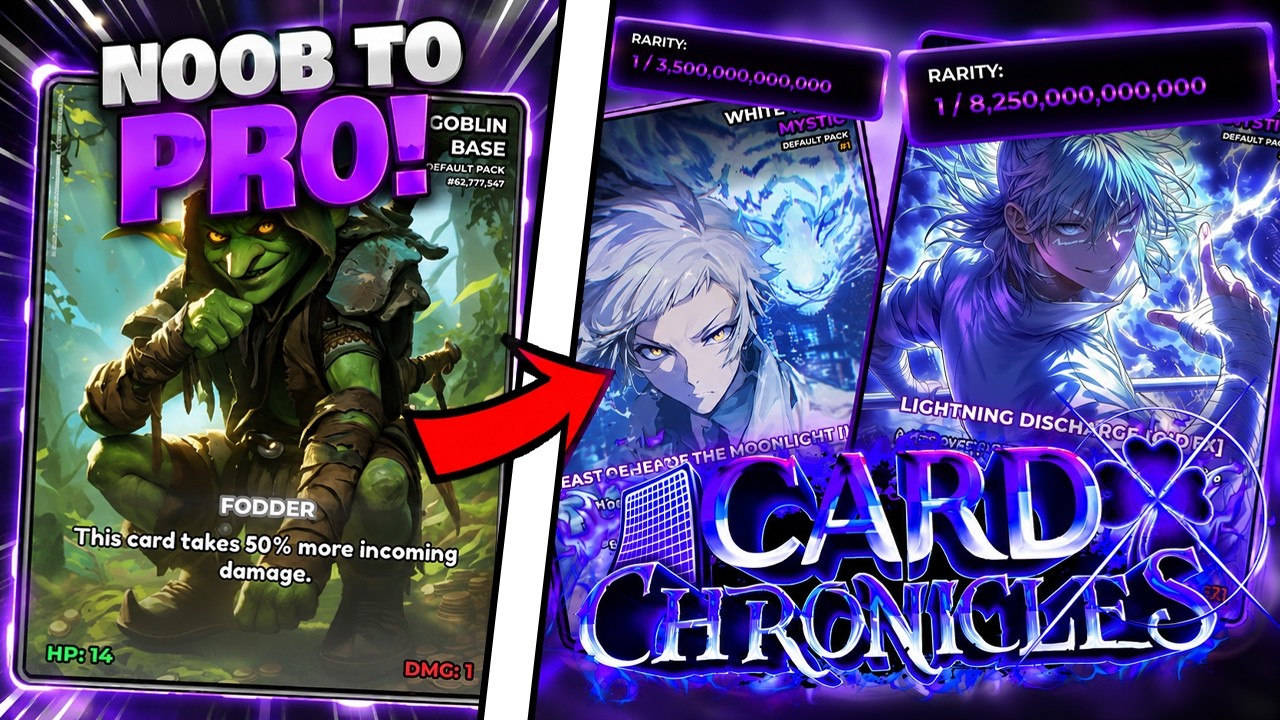
Use this as a luck and roll-session reference. The player-facing takeaway is to prepare boosts, track results, and avoid treating a single lucky or unlucky clip as an official rate table.
Watch source videoUse reported luck and reroll resources only after the farm loop is ready.
Use your failure pattern to decide what kind of card to look for.
Use waves as the controlled test for any possible upgrade.
Start with a lineup that can repeatedly clear its current waves, choose one keeper role to upgrade, and save reported luck or roll resources for a focused rolling window. The loop works because every action supports the next one.
Yes. Stabilize the part of the game that earns repeatable progress first. A boost is easier to judge and less likely to be wasted when your lineup can already complete the content you are farming.
Yes. Card Chronicles currently shows [DUNGEON] in public game information, so recheck your route after an update changes codes, card behavior, waves, or rewards.