Good time to roll
Roll after you know the weakness in your current lineup and have repeatable waves ready for testing. This lets you value a pull by what it changes, not just by how it looks.
Use boosts with a plan
Luck is a major Card Chronicles player question because public codes listings and creator videos repeatedly mention Luck Potions, Super Luck Potions, Roll Speed, and Trait Rerolls. The useful part is not claiming a hidden percentage. It is choosing when a boost is worth using, what you are trying to roll for, and how you will test whether a new card actually improves your lineup.
Think of luck as part of the wider progression loop. A boost has more value when you already have a stable farm route, one clear card job to improve, and enough time to compare new pulls. Without those three things, it is easy to spend a resource and learn nothing from the result.
Video by D1SGUISED. Open on YouTube.
Use this as a second luck reference. The site translates the creator-style tip format into a cautious checklist: know what a boost is for, spend it during a prepared roll window, and do not treat short unlucky runs as proof the system is broken.
Source boundary: Full transcript not available from automated extraction.
The video topic supports a dedicated luck page, but exact rates still need official or in-game evidence.
Track your roll session before and after boosts. Screenshots or notes help you avoid guessing whether a tactic actually helped.
This is a player routine, not a claim about hidden odds. It helps every roll session produce a useful next decision.
Last reviewed: July 11, 2026
| Action | How to do it | Why it helps |
|---|---|---|
| Pick one goal before rolling | Decide whether you need a wave-clear carry, boss survival, support, or a better replacement for a temporary filler. | Stops a session from becoming blind rerolls. |
| Check reported rewards carefully | Use the codes page for current reported luck, speed, or reroll rewards, including status and requirements. | A code claim is useful only after it works in game. |
| Prepare a stable test route | Choose a wave or foe you can repeat before using a boost. | You need a consistent comparison after a new pull. |
| Use the boost during a focused window | Roll while you can examine cards and put candidates into a lineup test. | Turns resources into decisions instead of background noise. |
| Test one replacement at a time | Swap a single slot and run the same content again. | Makes it clear whether the new card solved the right problem. |
| Keep a short result note | Record the goal, the card job tested, and the outcome. | A small record makes the next luck session less wasteful. |
Roll after you know the weakness in your current lineup and have repeatable waves ready for testing. This lets you value a pull by what it changes, not just by how it looks.
Avoid using a resource when you cannot test cards, when your lineup is already failing basic waves, or when you have no idea which slot needs replacing.
A card can be worth keeping as a temporary filler even if it is not the final answer. Mark what job it fills and revisit it after your main carry or support gap changes.
The following videos are supporting references for luck and high-volume rolling topics. They help show the problems players are trying to solve, but do not replace an official rate table or direct in-game verification.

Use this as evidence that Card Chronicles players care about large roll sessions and luck variance. The site turns that into advice about tracking roll windows instead of judging luck from a tiny sample.
Watch source video
Use this as a luck routine reference. The safe player advice is to treat luck as a session setup problem: clear inventory decisions, prepare boosts, roll in a planned window, and record what changed.
Watch source video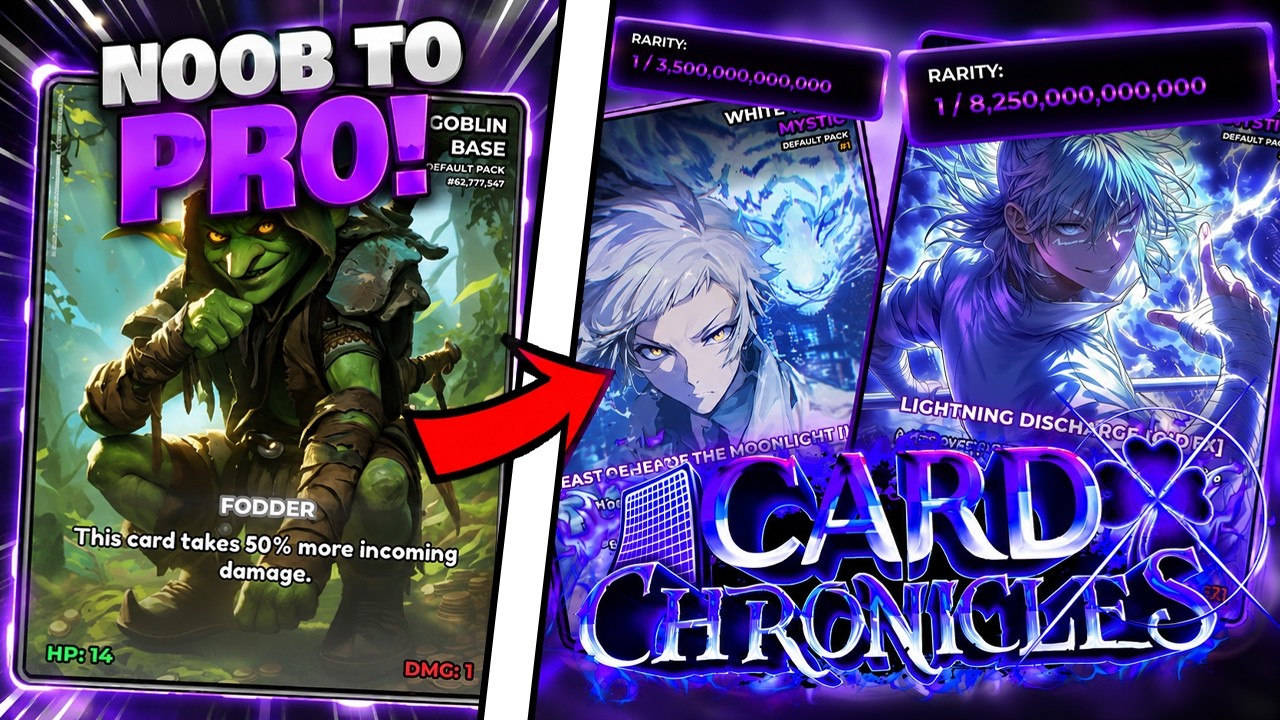
Use this as a luck and roll-session reference. The player-facing takeaway is to prepare boosts, track results, and avoid treating a single lucky or unlucky clip as an official rate table.
Watch source videoReview reward labels, requirements, and current code status before a session.
Make the underlying wave and upgrade route stable before using a boost.
Compare a new card by the lineup job it solves, not a guessed rate.
Public codes sources report Luck Potions and Super Luck Potions as possible rewards. This guide does not claim exact effects, but recommends saving any reported boost for a focused session where you can test new pulls.
Usually no. First make sure your lineup can complete the content you are farming and decide what card job you need. A focused roll window is easier to judge than using a boost during a random session.
No public official rate table is used on this site. Video topics and codes listings show strong player demand for luck guidance, while exact rates and values remain unknown until they have direct evidence.